PDR vs SMART Repair: What’s the Difference?
If you’re trying to decide how to fix cosmetic damage on your car, you may have come across both paintless dent repair (PDR) and SMART repair as options. They sound similar, but they’re very different techniques used for different types of damage. Choosing the wrong one can cost you more money — or leave you with a result that doesn’t match the original finish.
What is SMART Repair?
SMART stands for Small to Medium Area Repair Technology. It’s a catch-all term for minor cosmetic repairs that involve some combination of filler, paint, and lacquer. SMART repair is the right approach when the paint surface has been broken — scratches that cut through to the primer or metal, scuffs, deep chips, or dents where the impact has cracked or chipped the factory finish.
Because SMART repair involves new paint, the quality of the colour match matters. A skilled SMART repairer can blend the new paint into the surrounding area so the repair isn’t obvious, but there will always be new paint on the panel — and over time, that paint may age differently to the original factory coat.
What is PDR — and When is it Better?
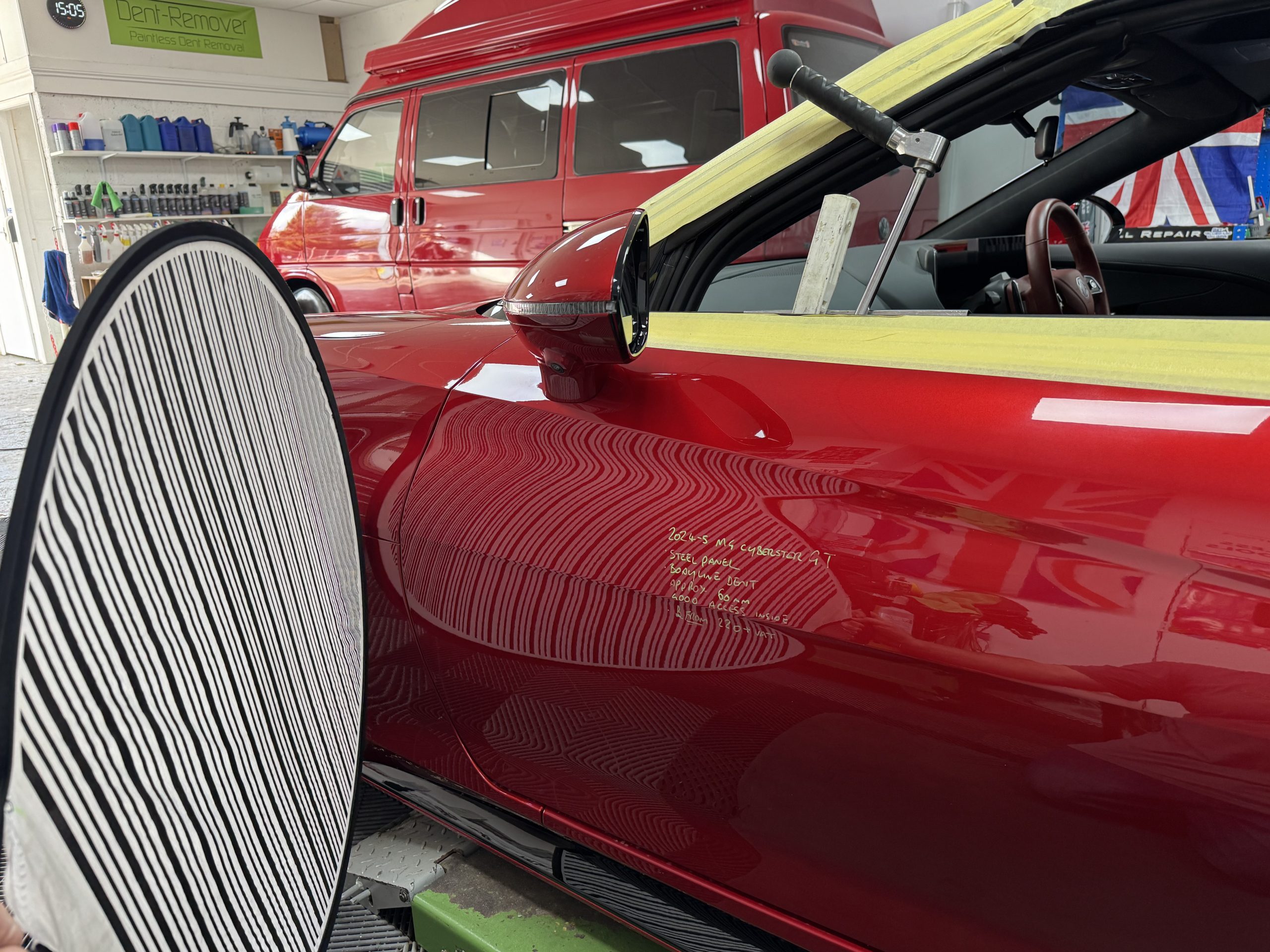
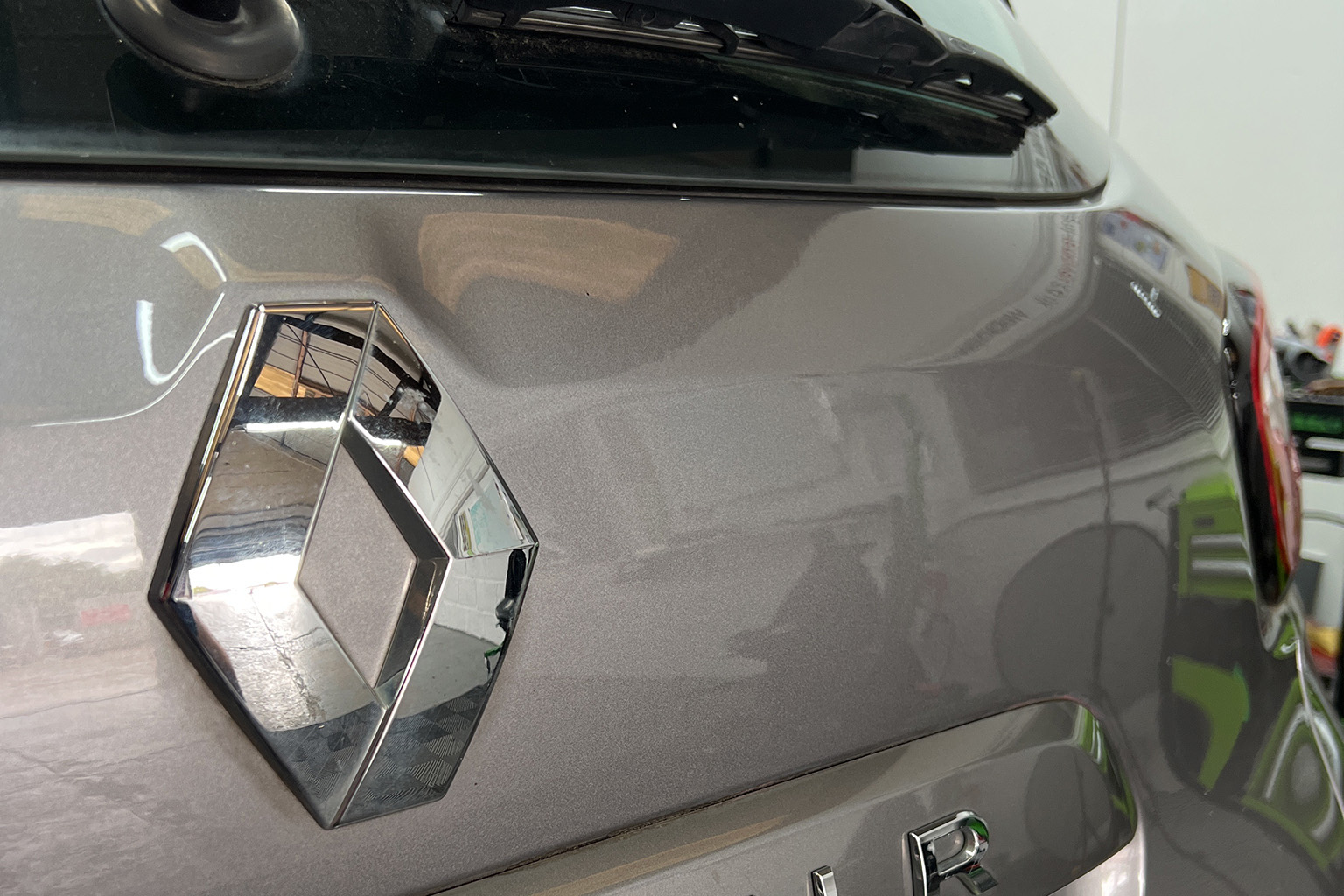
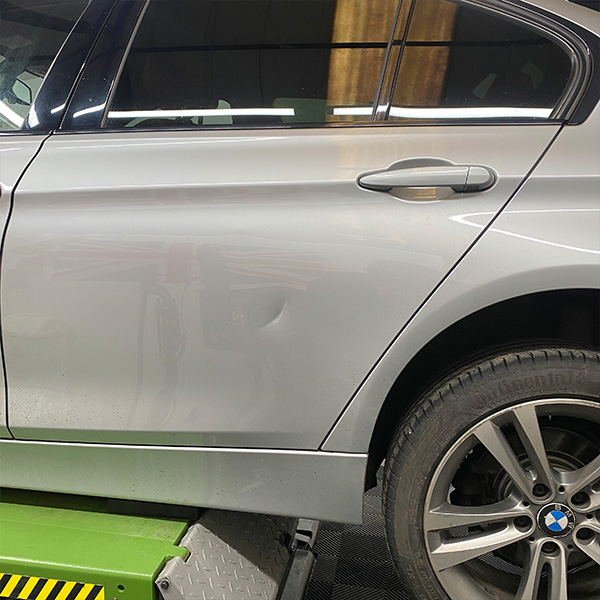
Paintless dent repair works on the opposite situation: dents where the paint surface is completely unbroken. Instead of filling or repainting, a PDR technician accesses the back of the panel and carefully massages the metal back to its original profile. No chemicals, no filler, no new paint — the factory finish stays exactly as it left the manufacturer.
When a dent is suitable for PDR, it’s almost always the better choice. It’s faster, less expensive than a respray, and produces a better long-term result because there’s no new paint to fade or peel, no filler to crack, and nothing for a paint-depth gauge or vehicle history check to flag as a previous repair.
The Simple Rule
If the paint is broken, you need SMART repair or a bodyshop respray. If the paint is unbroken but the metal is dented, PDR is almost certainly the right choice. For damage that has both — a dent with a minor scuff or chip — there’s a middle ground: a tidy-up repair where PDR removes the dent and the surface damage is improved as much as possible without filler. It won’t be completely invisible, but it’s often better value than a full respray when the paint damage is relatively minor.
If you’re not sure which category your damage falls into, the easiest thing to do is send a short video over WhatsApp — Martin at Dent Remover can advise which approach is right for your specific damage before you commit to anything.
Get a free estimate — send a photo or short video of your dent and we’ll give you a realistic price before you book.
Common Questions About PDR and SMART Repair
Q: Can PDR fix scratches as well as dents?
PDR is designed for dents where the paint surface is unbroken. If a dent also has a scuff or scratch, Dent Remover offers a ‘tidy up’ repair: the dent is removed and the scuffed area is improved as much as possible, though some trace of the original scratch may remain since no filler or paint is used.
Q: What if the dent has cracked the paint?
PDR relies on the paint surface being unbroken. If the paint itself has cracked or chipped at the dent site, a pure PDR repair may not fully restore the finish — a ‘tidy up’ repair can improve the dent shape, but a small touch-up or respray may still be needed for the paint itself.
Q: Will a repaired dent be visible afterwards?
When the damage is suitable for PDR, the aim is a result you can’t see or feel — many customers say they can run their hand over the repaired panel and feel nothing. Deeper, sharper or stretched damage may leave some very minor residual signs, which would be explained at the inspection.
Q: Is PDR cheaper than a bodyshop respray?
Generally, yes — because there’s no filler, primer, paint or blending labour involved, PDR repairs typically cost less than a full bodyshop respray, and they’re usually much quicker too.
See all 52 Dent Remover FAQs on the FAQ hub page.